home | about | text only | newsletter | forum | contact | credits & making of | legal stuff
home | über crimeZZZ | textversion | newsletter | forum | kontakt | credits & making of | rechtliches
serial killers by name N
serienkiller nach namen N
amaZon
amaZon
CHANGE LANGUAGE - ENGLISH SPRACHE WECHSELN - DEUTSCH
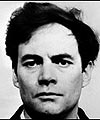
| NEILSON Donald | 1937 |  |
 |
... | ... | ... | 4 | ||
| Black Panther | 1974 | 1975 | |||||||
| : ... | ... | ... | ... | ||||||
| Verdict/Urteil: | |||||||||
For a criminal determined to outwit the police, kidnap offers a unique chance to show off your cunning and guile. So when petty thief Donald Neilson decided, around Christmas 1974, to step up into the big league he chose kidnap as his means of promotion. There are distinct similarities between Neilson and another callous killer, Michael Sams - who 20 years later kidnapped Birmingham estate agent Stephanie Slater after murdering Leeds prostitute Julie Dart. Both were brought up in West Yorkshire - Neilson in Bradford, Sams in Keighley - and both were manual workers. Neilson was a jobbing carpenter, while Sams ran his own workshop. Neilson and Sams both had scrapes with the law, enjoyed military-style planning and were determined to outwit the police and show their own intellectual superiority. Trained to kill He relished army life and picked up an interest in guns and survivalism, which he was to maintain throughout his life. However, his fiancée Irene, who he married in 1955, persuaded him not to pursue a career in the services, but to come back to Bradford and settle down. Their daughter Kathryn was born in 1960 and it was at this time he decided - partly to protect his own child from suffering the bullying he had experienced - to change his name by deed poll to Neilson. Neilson started work as a carpenter, but he struggled to make ends meet and also failed to make a success of a taxi firm and a security guard business. As financial success continued to elude him, he became more and more over-bearing and domineering towards his wife and daughter. Turning to crime Meanwhile his wife and daughter were kept on a tight leash and neighbours noticed how poorly dressed she was whenever she was spotted out of the house. A photograph album found in Neilson's home also revealed how he would force his wife and daughter to play "soldiers", dressing up in combat gear, camping underneath camouflage nets and having battles using soft drink cans as make-believe grenades. Shotgun fire Richardson was lucky to survive and was able to give police a description, the first of six photo fits, none of which proved to be a realistic likeness of Neilson. It was two years before Neilson fired his shotgun again in anger, and this time he took a life. On 15 February 1974 he broke into a sub-post office in Harrogate, North Yorkshire and shot dead Donald Skepper when the sub-postmaster confronted him. Seven months later the Black Panther claimed another victim - Derek Astin - in almost identical circumstances during a robbery at Higher Baxenden, near Accrington, Lancashire. The police quickly linked the two murders, and they added a third on 11 November when Sidney Grayland, 55, was shot dead at his sub-post office in Oldbury, West Midlands. This time he got away with £800 in cash and postal orders. But despite killing three people Neilson's exploits had failed to raise much interest in the national newspapers. All that was to change two months later, when he turned to kidnap as a means of getting his hands on the financial jackpot he craved. The heiress He had also read about a kidnap in the United States in which another heiress had been imprisoned in an underground cell. Neilson set about finding all he could about 17-year-old Lesley Whittle and also sought out a suitable location where he could hold her captive while he obtained the ransom. On the night of 14 January 1975 Neilson broke into Lesley's home in Highley, Shropshire and quietly abducted her from her bedroom, allowing her to put on only a dressing gown. It is not known where Neilson took her initially. In tape-recorded messages made by her, she sounded calm and not unduly scared. But within days of her kidnap she is believed to have been taken to the place where she would eventually die - a deep drainage shaft beneath Bathpool Park, near Kidsgrove, Staffordshire. Neilson left detailed instructions for the Whittle family on a piece of Dymo tape that he left in the family's lounge. He demanded a £50,000 ransom, and urged Lesley's older brother, Ronald, to go to a telephone kiosk in Kidderminster, Worcestershire with it. He also emphasised that Lesley would be killed if he suspected the police had become involved. The family did contact the police but elaborate measures were made to make sure the Black Panther was not alerted. Fatal mistakes Detective Chief Superintendent Bob Booth, who was leading the inquiry and had an unblemished record of having solved every one of the 70 murders he had investigated, was gutted. "I felt sick that it should have happened. We had let her down. I had let her down. I'm in charge, it was my fault," he said in a recent documentary. A second ransom drop the following night failed because of invasive press coverage. Another 24 hours passed and then the Black Panther called the Whittles' home and played a tape-recorded message by Lesley, in which she gave instruction on another ransom exchange this time in Kidsgrove. The directions led Ronald Whittle to Bathpool Park, but heavy traffic and difficulty finding more Dymo tape further delayed him. He was 90 minutes late when he arrived at the park, where he was supposed to wait for a flashing light. It never appeared. There were later severe recriminations between West Mercia Police and the Staffordshire force with the former claiming the latter had blundered by sending a Panda car into the park at a key moment. The following morning Mr Booth wanted to search the park, but he was over-ruled by a team of Scotland Yard officers who decided there was nothing to find. Little did they know that a few yards from the car park where Ronald Whittle had arrived to drop the ransom was the top of the shaft where Lesley was imprisoned. Direct appeal A week went by and then Mr Booth was contacted by West Midlands Police, who had noticed a car left in Dudley close to a shooting at a Freightliner railway terminal, which had fatally injured a security guard, Gerald Smith. The car had lain undetected for a week - the shooting had happened on the same night as the second ransom drop. When they did search it they realised it was connected to the Whittle case. Inside the car was a cassette tape and four envelopes that contained detailed instructions leading to the Freightliner terminal. It appeared Neilson's plans had come unstuck when Mr Smith challenged him in the railway yard. He had been forced to leave the car and the tape and had abandoned his attempt to contact the Whittle family. Ballistics evidence also linked the Gerald Smith shooting with the Black Panther's previous murders, which underlined the danger that Lesley was in. A gruesome discovery "To imagine a 17-year-old having to endure that and finally to succumb to it and die in that horrible cold, damp place beggars belief," said Mr Maskery. But the discovery of Lesley provided few clues for the police to go on and the Black Panther remained at loose for another nine months. Neilson may have got away with her murder but for his own greed. He decided to go back to post office robberies and one night in December 1975 he was spotted by two police officers acting suspiciously near a sub-post office in Mansfield, Nottinghamshire. The Black Panther panicked. As PC Stuart McKenzie and asked him some routine questions Neilson pulled out a double-barrelled shotgun and forced the officer and his colleague, PC Tony White, to drive off at gunpoint. PC McKenzie, fearing for his life, took drastic action. He swerved the car, slammed on the brakes and skidded into the kerb outside a fish and chip shop. As PC McKenzie and PC White fought with Neilson they were joined by passer-by Roy Morris, who helped them overpower him. The penny drops In July 1976, he went on trial at Oxford Crown Court and was given five life sentences. Neilson remains in prison today and has been told by the Home Secretary he will never be released alive. The Black Panther's victims 15 Feb 1974: Donald Skepper 6 Sep 1974: Derek Astin 11 Nov 1974: Sidney Grayland 15 Jan 1975: Gerald Smith 17 Jan 1975: Lesley Whittle For a criminal determined to outwit the police, kidnap offers a unique chance to show off your cunning and guile.
So when petty thief Donald Neilson decided, around Christmas 1974, to step up into the big league he chose kidnap as his means of promotion. There are distinct similarities between Neilson and another callous killer, Michael Sams - who 20 years later kidnapped Birmingham estate agent Stephanie Slater after murdering Leeds prostitute Julie Dart. Both were brought up in West Yorkshire - Neilson in Bradford, Sams in Keighley - and both were manual workers. Neilson was a jobbing carpenter, while Sams ran his own workshop. Neilson and Sams both had scrapes with the law, enjoyed military-style planning and were determined to outwit the police and show their own intellectual superiority. Trained to kill He relished army life and picked up an interest in guns and survivalism, which he was to maintain throughout his life. However, his fiancée Irene, who he married in 1955, persuaded him not to pursue a career in the services, but to come back to Bradford and settle down. Their daughter Kathryn was born in 1960 and it was at this time he decided - partly to protect his own child from suffering the bullying he had experienced - to change his name by deed poll to Neilson. Neilson started work as a carpenter, but he struggled to make ends meet and also failed to make a success of a taxi firm and a security guard business. As financial success continued to elude him, he became more and more over-bearing and domineering towards his wife and daughter. Turning to crime Meanwhile his wife and daughter were kept on a tight leash and neighbours noticed how poorly dressed she was whenever she was spotted out of the house. A photograph album found in Neilson's home also revealed how he would force his wife and daughter to play "soldiers", dressing up in combat gear, camping underneath camouflage nets and having battles using soft drink cans as make-believe grenades. Shotgun fire Richardson was lucky to survive and was able to give police a description, the first of six photo fits, none of which proved to be a realistic likeness of Neilson. It was two years before Neilson fired his shotgun again in anger, and this time he took a life. On 15 February 1974 he broke into a sub-post office in Harrogate, North Yorkshire and shot dead Donald Skepper when the sub-postmaster confronted him. Seven months later the Black Panther claimed another victim - Derek Astin - in almost identical circumstances during a robbery at Higher Baxenden, near Accrington, Lancashire. The police quickly linked the two murders, and they added a third on 11 November when Sidney Grayland, 55, was shot dead at his sub-post office in Oldbury, West Midlands. This time he got away with £800 in cash and postal orders. But despite killing three people Neilson's exploits had failed to raise much interest in the national newspapers. All that was to change two months later, when he turned to kidnap as a means of getting his hands on the financial jackpot he craved. The heiress He had also read about a kidnap in the United States in which another heiress had been imprisoned in an underground cell. Neilson set about finding all he could about 17-year-old Lesley Whittle and also sought out a suitable location where he could hold her captive while he obtained the ransom. On the night of 14 January 1975 Neilson broke into Lesley's home in Highley, Shropshire and quietly abducted her from her bedroom, allowing her to put on only a dressing gown. It is not known where Neilson took her initially. In tape-recorded messages made by her, she sounded calm and not unduly scared. But within days of her kidnap she is believed to have been taken to the place where she would eventually die - a deep drainage shaft beneath Bathpool Park, near Kidsgrove, Staffordshire. Neilson left detailed instructions for the Whittle family on a piece of Dymo tape that he left in the family's lounge. He demanded a £50,000 ransom, and urged Lesley's older brother, Ronald, to go to a telephone kiosk in Kidderminster, Worcestershire with it. He also emphasised that Lesley would be killed if he suspected the police had become involved. The family did contact the police but elaborate measures were made to make sure the Black Panther was not alerted. Fatal mistakes Detective Chief Superintendent Bob Booth, who was leading the inquiry and had an unblemished record of having solved every one of the 70 murders he had investigated, was gutted. "I felt sick that it should have happened. We had let her down. I had let her down. I'm in charge, it was my fault," he said in a recent documentary. A second ransom drop the following night failed because of invasive press coverage. Another 24 hours passed and then the Black Panther called the Whittles' home and played a tape-recorded message by Lesley, in which she gave instruction on another ransom exchange this time in Kidsgrove. The directions led Ronald Whittle to Bathpool Park, but heavy traffic and difficulty finding more Dymo tape further delayed him. He was 90 minutes late when he arrived at the park, where he was supposed to wait for a flashing light. It never appeared. There were later severe recriminations between West Mercia Police and the Staffordshire force with the former claiming the latter had blundered by sending a Panda car into the park at a key moment. The following morning Mr Booth wanted to search the park, but he was over-ruled by a team of Scotland Yard officers who decided there was nothing to find. Little did they know that a few yards from the car park where Ronald Whittle had arrived to drop the ransom was the top of the shaft where Lesley was imprisoned. Direct appeal A week went by and then Mr Booth was contacted by West Midlands Police, who had noticed a car left in Dudley close to a shooting at a Freightliner railway terminal, which had fatally injured a security guard, Gerald Smith. The car had lain undetected for a week - the shooting had happened on the same night as the second ransom drop. When they did search it they realised it was connected to the Whittle case. Inside the car was a cassette tape and four envelopes that contained detailed instructions leading to the Freightliner terminal. It appeared Neilson's plans had come unstuck when Mr Smith challenged him in the railway yard. He had been forced to leave the car and the tape and had abandoned his attempt to contact the Whittle family. Ballistics evidence also linked the Gerald Smith shooting with the Black Panther's previous murders, which underlined the danger that Lesley was in. A gruesome discovery "To imagine a 17-year-old having to endure that and finally to succumb to it and die in that horrible cold, damp place beggars belief," said Mr Maskery. But the discovery of Lesley provided few clues for the police to go on and the Black Panther remained at loose for another nine months. Neilson may have got away with her murder but for his own greed. He decided to go back to post office robberies and one night in December 1975 he was spotted by two police officers acting suspiciously near a sub-post office in Mansfield, Nottinghamshire. The Black Panther panicked. As PC Stuart McKenzie and asked him some routine questions Neilson pulled out a double-barrelled shotgun and forced the officer and his colleague, PC Tony White, to drive off at gunpoint. PC McKenzie, fearing for his life, took drastic action. He swerved the car, slammed on the brakes and skidded into the kerb outside a fish and chip shop. As PC McKenzie and PC White fought with Neilson they were joined by passer-by Roy Morris, who helped them overpower him. The penny drops In July 1976, he went on trial at Oxford Crown Court and was given five life sentences. Neilson remains in prison today and has been told by the Home Secretary he will never be released alive. The Black Panther's victims 15 Feb 1974: Donald Skepper 6 Sep 1974: Derek Astin 11 Nov 1974: Sidney Grayland 15 Jan 1975: Gerald Smith 17 Jan 1975: Lesley Whittle |
|||||||||