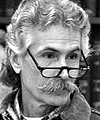
| A man facing a third trial for the murder of a 12-year-old Huntington Beach girl in 1979 pleaded not guilty Tuesday to charges of murdering four Los Angeles-area women in the 1970s.
Rodney James Alcala, 62, has spent much of the last 20 years on death row in connection with the slaying of Robin Samsoe. His two previous convictions in the case were overturned, and a date for the third trial has not yet been set.
Alcala was indicted Sept. 9 for the murders of Jill Barcomb, 18; Georgia Wixted, 27; Charlotte Lamb, 32;, and Jill Parenteau, 21. The slayings occurred between late-1977 and mid-1979.
The women were sexually assaulted, then beaten or strangled.
The indictment also alleges the special circumstance allegations of torture, multiple murder, robbery, rape, burglary and oral copulation.
Los Angeles County prosecutors already have announced they will seek the death penalty against Alcala on the four new cases if he is convicted.
Alcala has been in Orange County since 2003 while awaiting a new trial in the Samsoe case.
Los Angeles County prosecutors want to combine the Los Angeles County cases with the Orange County case, using prosecutors from both district attorney offices.
Orange County Superior Court Judge Francisco Briseno set a hearing on Jan. 13 to determine if the cases can be combined and tried in Orange County.
Defense attorney Richard Schwartzberg told Briseno he will oppose consolidation.
Mindful that the appeals court has twice tossed out Alcala's convictions for the Samsoe killing, defense attorney George Peters later told reporters that consolidation is an attempt to shore up a weak case with new charges that could bias a jury.
Schwartzberg told Briseno that the statute allowing consolidation is new and that there is no settled case law regarding it. If the ruling goes against his client, Schwartzberg indicated he would appeal the ruling while trial is still pending.
Orange County District Attorney Tony Rackauckas told reporters earlier that "by consolidating the charges, we will be able to pool our resources and give the public a clearer understanding of who Mr. Alcala is and what he did."
Prosecutors also said it will allow for judicial economy and for overlapping evidence to be presented.
Briseno also signed an order giving prosecutors access to Alcala's dental records from San Quentin.
According to the motion submitted by Los Angeles Deputy District Attorney Gina Satriano, evidence of a bite mark was recovered from the body of Barcomb by the coroner in 1979 and prosecutors want to compare the evidence collected from the victim's body to Alcala's teeth impressions.
According to Satriano, the bite mark severed the victim's right breast nipple.
The records will be turned over to prosecutors on Dec. 16.
Samsoe disappeared near the Huntington Beach Pier in July 1979, and her remains were found 12 days later in the San Gabriel Mountain foothills.
Alcala was convicted in 1980 of murdering Samsoe. He won a second trial in 1984 when the California Supreme Court ruled that evidence of prior attacks against young girls should not have been allowed at trial.
Alcala served time for attacking an 8-year-old girl with a pipe in 1968, and completed another term for an attack on a 14-year-old girl.
In 1986, he was tried again and convicted in the Samsoe case, although a key prosecution witness -- a Forest Service firefighter who was among those who found the girl's body and later linked Alcala to the site -- did not testify again because she said she had amnesia.
A three-judge panel of the 9th U.S. Circuit Court of Appeals unanimously upheld a trial judge's order that Alcala should be retried or released.
The retrial had been delayed by the death of attorney David A. Zimmerman, who had represented Alcala on his first appeal of the case.
After Peters was appointed, Alcala was set to go to trial on Oct. 3 but that date was vacated with the addition of the new charges.
Satriano could not estimate when trial would begin on the case, saying a lot has to do with the consolidation motion. |