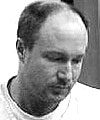
The man prosecutors once pegged as the “Route 29 stalker” who terrorized much of central Virginia in early 1996 was on trial this summer in Manassas.
One night in February 1996, 38-year-old Carmelita Shomo was driving on Dumfries Road in Manassas, heading home from work.
A truck drove up behind her, flashing its lights. When Shomo pulled over, a man approached her and said there were sparks coming from under her car.
He offered her a ride, and she accepted.
Shomo got in his truck and the man drove off. Later, he pulled over to the side of the road and attacked her.
After a scuffle, Shomo was able to get free, though she caught her ankle in the truck’s seat belt and was dragged down the road before getting free.
The method of the abduction was eerily similar to the so-called “Route 29 stalker” who around the same time attempted to abduct up to 30 women along the Route 29 corridor from Charlottsville to Northern Virginia.
Authorities believe those abductions climaxed with the 1996 murder of 25-year-old Alicia Showalter Reynolds.
Darrell David Rice was arrested in 1997 for an attempted abduction in Shenandoah National Park, and was in jail when Shomo picked a photograph of him out of a police lineup and said he was the man who attacked her.
In 2004, Rice was indicted in Prince William County for allegedly attempting to abduct Shomo.
The Prince William County indictment came just after federal prosecutors dropped murder charges against Rice for two other 1996 murders in Shenandoah National Park. That case fell apart after DNA evidence seemed to exclude Rice.
When Rice was indicted in Prince William County, Commonwealth’s Attorney Paul B. Ebert said he believed Rice was the man responsible for the “Route 29 stalker” abductions.
But Rice’s defense attorneys pointed the finger at another man: suspected serial killer Richard Evonitz, who lived in Fredericksburg at the time of the “Route 29 stalker” abductions, and was later implicated in the killing of three young girls.
After numerous pre-trial hearings that covered every subject from hypnosis-induced testimony to what kind of truck Rice was driving at the time of the incident, the Rice trial started in August.
It was widely expected that prosecutors would try to peg him as the “Route 29 Stalker,” and Rice faced up to life in prison if convicted.
But from the opening bell of the jury trial, prosecutors narrowed the focus to the Carmelita Shomo incident and stayed away from the term “Route 29 Stalker.”
The main evidence offered against Rice was the testimony of Shomo, who pointed at him from the witness stand and said she was “100 percent sure” he was the man who attacked her.
But defense attorneys poked holes in Shomo’s testimony, pointing out that she may have previously implicated other men as being her attacker.
Though one juror said after the trial that there wasn’t enough evidence to convict Rice, the case never got that far.
Prosecutors cut a deal with Rice. He entered a guilty plea to one count of unlawful wounding, and in return was sentenced to time served.
Afterward, prosecutors said they made the deal to “get something” out of the case, and characterized Rice as a dangerous man.
Rice’s defense attorneys, who worked the case for free, saw it as long overdue justification for a man who had been wrongfully accused twice by prosecutors looking to get a conviction for unsolved cases.
Rice is scheduled to be released from jail to a halfway house midway through 2006, and completely released in 2007. |