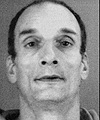
In Rochester, police are trying to determine whether Robert "Bruce" Spahalski committed at least two killings. Behind the towering walls of the maximum-security Attica Correctional Facility, Spahalski's identical twin, Stephen, waits and hopes his own time in prison will soon end.
In November, the Attica inmate learned that his identical twin might, like himself, be a killer.
A serial killer, in fact.
"I thought I was the only murderer in the family," said Stephen Spahalski, remembering the day last month when an Attica corrections officer showed him a newspaper article stating his identical twin had confessed to four Rochester-area slayings over nearly 15 years.
In Rochester, police are trying to determine whether Robert "Bruce" Spahalski did commit the killings to which he confessed. He has been charged in connection with two slayings, and an investigation is under way to determine whether he could be responsible for those and other unsolved homicides. In the meantime, he is being held at Monroe County Jail.
At Attica, in Wyoming County, meanwhile, Stephen hopes to soon go free.
While Robert was living the life of a street hustler in Rochester, operating a male escort service and working as a prostitute, Stephen was spending almost all of his adult life behind bars.
In 1971, at age 16, Stephen stabbed a 48-year-old Elmira Heights storeowner to death. He served nearly eight years, then was released, only to be convicted within a year on charges of robbery and kidnapping. He was imprisoned again until a 1999 release, but within months was reincarcerated on a parole violation.
Could be free in April
Stephen could be freed in April. He has had a largely spotless disciplinary record in recent years at Attica, records show, and he maintains he can live successfully outside the walls. If released, he plans to return to Elmira where he and his brother grew up, and where they still have family. In November, the Democrat and Chronicle wrote to Robert Spahalski in jail, posing questions about his confession. A man who said he was Spahalski telephoned a Democrat and Chronicle reporter afterward and said he would answer questions but only if $100 were placed into his jail account. The newspaper does not pay for interviews.
Stephen, however, readily agreed to an interview, which was conducted at the Attica prison on Tuesday — the day after the Spahalski twins turned 51.
"He'll never see the streets again. ... I assume he's gone forever, " Stephen said of his brother, whom he calls Bruce. "He'll never see home again. He's gone."
With their receding hairlines and prominent, angular cheekbones, the Spahalski brothers still bear a striking resemblance to each other. Stephen, however, applies makeshift makeup to his eyes, cheeks and nails. He said he has been doing so for almost a decade, since he came out, behind prison walls, as a gay man.
His nickname is "Christmas," he said, because the season is his favorite time of year. And he enjoys small pleasures within prison, such as recently watching The Wizard of Oz on TV.
"It's part of home, The Wizard of Oz," he said. "It's just part of everybody's home. That's why they put it on every year."
When young, he and Robert shared the special and sometimes mysterious bond of twins, and typically knew where the other was and what he was doing. Stephen said that when he was incarcerated as a teen for the killing, Robert often visited him in prison.
But, in recent decades, communication has been infrequent.
"We're still close, but we don't write too much any more," Stephen said. "There's only so much to discuss out there."
Despite that separation, Stephen is supportive of his twin, even in the face of accusations that Robert may be a multiple murderer.
If his brother killed, Stephen said, "I don't know what made him do that."
As teens, Stephen and Robert Spahalski shared not only features but hobbies and pastimes. Both could be rambunctious partygoers yet were disciplined enough to be excellent gymnasts, Stephen said.
They were only 8 or 9 when they first began gymnastic training, Stephen said.
'I was doing good'
"I would have got a (college) scholarship for it," he said. "I was in the state meets and all that stuff. If it wasn't for the murder, I'd be all set for life. I was doing good. I had a nice girlfriend."
The "murder" is his slaying of the storeowner, Ronald Ripley.
State Police initially suspected Robert of the killing, recalled Ransom P. Reynolds Jr., an Elmira lawyer who prosecuted the Ripley case as a young assistant district attorney.
"The focus was on Robert Spahalski, not Stephen Spahalski. They thought that Robert Spahalski was the one that did it," Reynolds said. "And as they were focusing in on Robert, Stephen confessed to it. The police always suspected that Robert may have been there at the time, but they could never prove it."
Surprise confession
Stephen Spahalski's confession "came as a surprise" to investigators, Reynolds said. The investigators learned that Ripley had been engaging in sexual acts with young men in Elmira.
"Stephen's statement was that Ripley had made unwanted homosexual advances toward him and came after him in a homosexual way, and so he killed him, he stabbed him," Reynolds recalled. The altercation occurred on the steps leading to the basement of Ripley's shop; his body was found in the building's basement.
Stephen pleaded guilty to manslaughter, avoiding trial.
When asked Tuesday whether the killing may have been prompted by a sexual advance, Stephen replied: "I don't talk on it. If I kill someone, I kill them for a reason. That's all I know."
When prodded, however, Stephen did talk about Ripley — noting that, after the slaying, he was able to communicate with Ripley, and that he may do so again.
"He's deceased, but I did business afterwards with him through a computer," Stephen said. "His papers are in order with me. He don't owe me nothing. He's still going to try to get me, Ronald Ripley, but I already did business with him.
"I'm real pissed with that man sometimes. He never saw me hit him from behind. ... He died. I made sure he died. But he never saw me kill him."
Stephen says he sees reminders of Ripley in the prison's mundane details. "All the exit signs here are maroon. That's in his name. ... That's because of the maroon vest he had on (when slain)."
Who's who?
The Spahalskis have been incarcerated in state prison together several times, Stephen said, and in 1978 in the Auburn Correctional Facility, one of them tried unsuccessfully to break out.
Prison officials, however, couldn't figure out which one.
"They never did and we never told them either," Stephen said.
Robert was the culprit, Stephen said. In the auto shop, Robert built a hidden compartment underneath an old Army truck that was to be sent to a government agency. Robert and another prisoner then tucked themselves into the compartment.
News accounts show that prison officials were tipped off to the planned escape, and nabbed one inmate running from the truck before it left prison grounds.
They were unable to apprehend the other, but they recognized him as one of the Spahalskis.
"I was not wearing makeup (then)," Stephen said. "At that time we were in pretty good shape. We looked pretty much the same."
Both brothers were thrown into solitary confinement afterward, Stephen said.
Delayed freedom?
Nearly three decades have passed since the attempted escape — and Stephen has spent most of them in prison. Though he could leave prison as soon as April, he said in the interview that corrections officials may decide he did not complete a necessary "violence" course.
Attica inmates are offered courses focusing on alternatives to violence or aggression management. Corrections officials said that they can continue to hold an inmate if it's determined he or she did not take courses needed for rehabilitation.
Stephen Spahalski is scheduled for a review this month to determine whether he must take additional courses, corrections officials say.
He could be incarcerated until mid-2007 if he has to take the course, Stephen said.
Stephen said he'll continue to follow the criminal case against his brother. And he'll be a supportive sibling, though he has not heard from Robert since his November arrest.
"Eventually, after he's pretty well done in the courts, I'll get in touch with him."
Stephen has followed accounts of his brother's arrest through the news. Robert went into a Rochester police station on Nov. 8, and, police say, confessed to the slaying of Vivian Irizarry. He led them to her body in the basement of a city house where he and a girlfriend had an apartment.
Authorities said Robert also confessed to the 1991 Webster slaying of Charles Grande and to two other killings; police have not identified those two victims.
Stephen said he's surprised that his brother would admit to murders.
"It might have weighed on him. I don't know. I'm not a psychiatrist.
"Maybe he's sorry for killing them," he said. "He wanted it off his chest. It's off his chest." |